Tracing Synchronization Challenges in Shared Audio Environments Across Global Multiplayer Platforms During Peak Concurrent Usage Periods
Frankie Schmitz · Sep 15, 2026
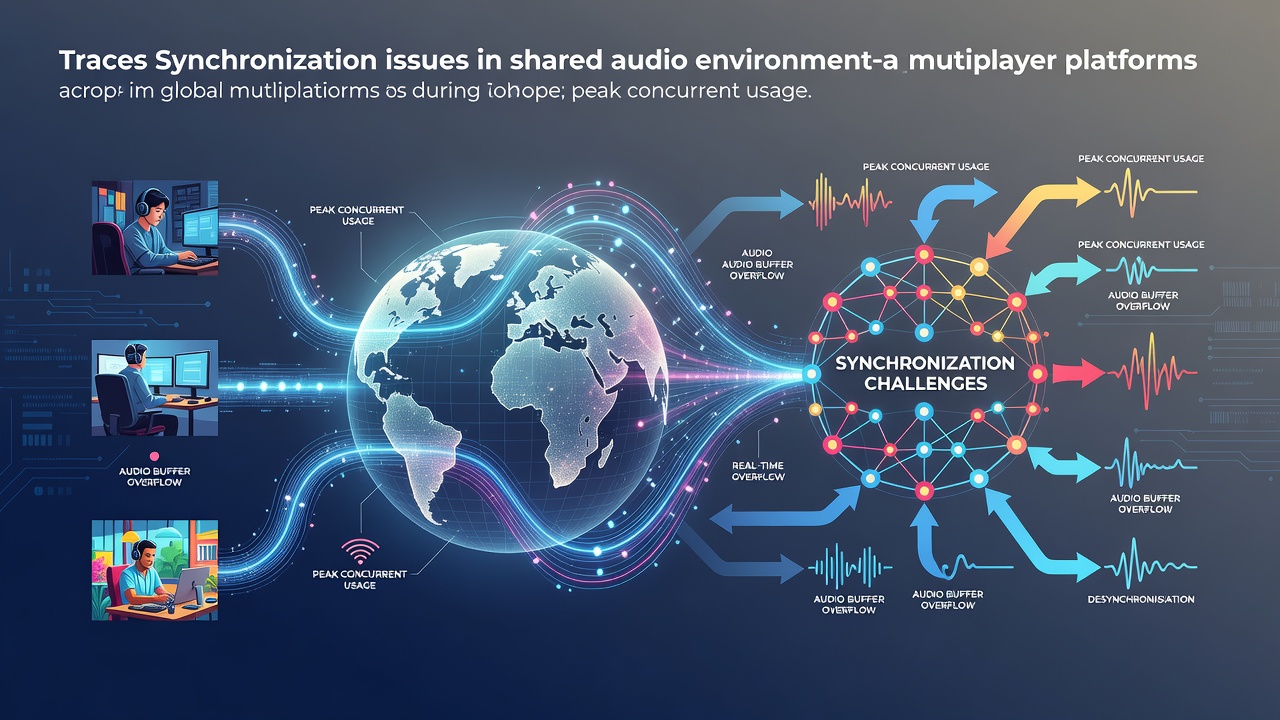
Tracing Synchronization Challenges in Shared Audio Environments Across Global Multiplayer Platforms During Peak Concurrent Usage Periods
Shared audio environments in global multiplayer platforms rely on precise timing protocols to align voice communications, sound effects, and ambient cues across distributed user bases, yet peak concurrent usage periods introduce variables that disrupt these alignments. Data from network monitoring services show that player counts often surge during evening hours in multiple time zones, creating congestion points where audio packets experience variable delays. Researchers at institutions studying real-time communication have documented how these delays compound when servers route traffic through under-provisioned regional nodes.
Core Mechanisms Behind Audio Alignment
Audio synchronization depends on timestamping systems and jitter buffers that reorder incoming packets before playback. Platforms implement variations of Real-time Transport Protocol extensions tailored for gaming, where each audio frame carries sequence numbers and clock references. Observers note that clock drift between client devices and central servers widens under load, because NTP adjustments cannot always compensate for asymmetric routing paths that emerge during heavy traffic. One study from a European research consortium tracked clock offsets exceeding 40 milliseconds in sessions involving participants across three continents.
Peak Usage Dynamics and Their Effects
September 2026 saw documented spikes exceeding 12 million concurrent sessions on major battle royale titles during weekend events, according to aggregated telemetry released by platform operators. These periods coincide with increased packet loss rates on intercontinental links, where audio streams compete with game state updates for bandwidth. Engineers have mapped how buffer underruns occur when arrival intervals stretch beyond the decoder's tolerance window, resulting in audible dropouts or staggered playback. What's interesting is that regional peering agreements sometimes reroute traffic through longer paths, amplifying the mismatch between expected and actual delivery times.
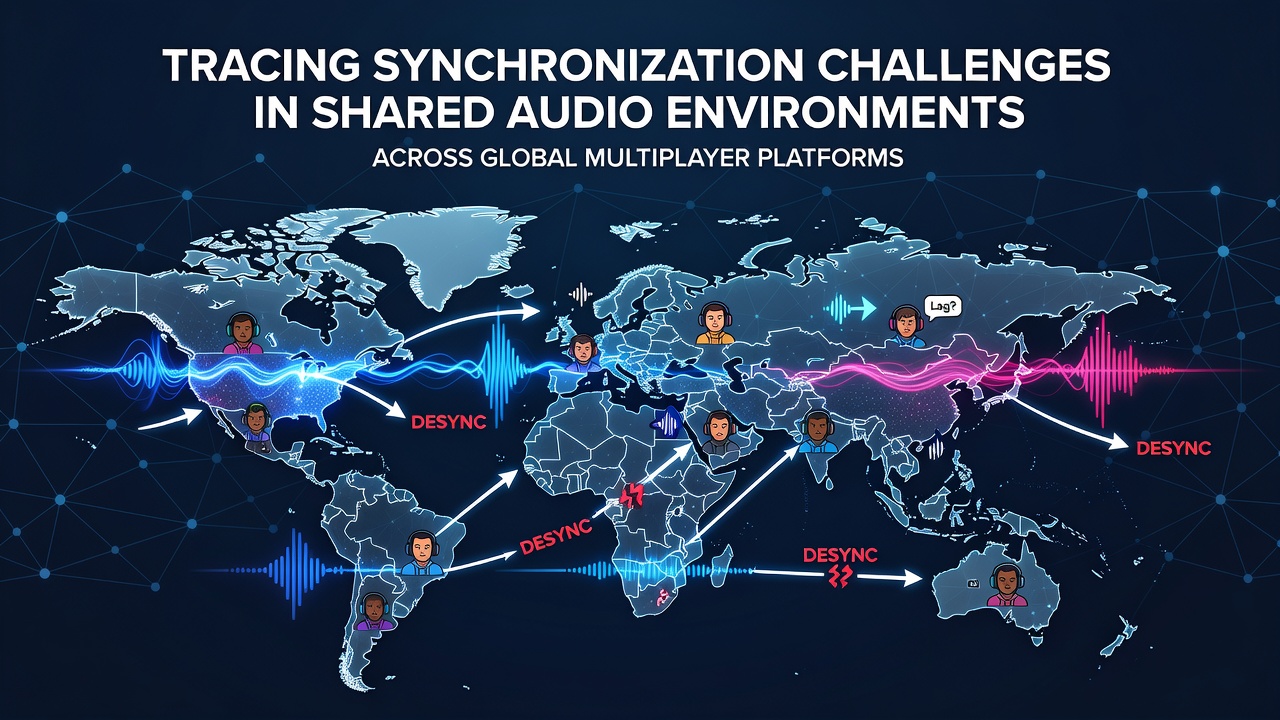
Platform-Specific Implementation Differences
Distinct architectures handle these pressures differently. Some services prioritize voice channels with dedicated low-latency queues, while others multiplex audio alongside positional data within the same stream. Figures from industry reports indicate that services using adaptive bitrate for voice reduce desync incidents by reallocating codec parameters mid-session, although this adjustment itself introduces brief discontinuities. Academic analyses from North American universities have compared open-source engines against proprietary stacks, revealing that the former often expose more granular control over buffer sizing yet require careful tuning to avoid overcompensation during flash crowds.
Geographic and Infrastructure Variables
Latency baselines vary sharply between fiber-dense corridors and regions reliant on satellite backhaul. Australian communications authorities have published measurements showing that trans-Pacific audio streams during peak windows encounter additional variance from submarine cable utilization patterns. Similar patterns appear in data collected across South American exchanges, where last-mile congestion during local evening hours compounds upstream jitter. Those who model these environments find that predictive routing algorithms can mitigate some effects when trained on historical usage graphs, yet sudden global events still overwhelm static configurations.
Approaches to Reducing Desynchronization
Developers deploy server-side prediction and client-side extrapolation to mask gaps, while some adopt redundant audio streams sent via alternate paths. A Canadian research initiative examined mesh-based voice overlays that bypass central relays during detected congestion, cutting average misalignment by measurable margins in controlled trials. Trade associations representing online entertainment sectors have begun sharing anonymized datasets that help identify recurring bottleneck locations, allowing operators to provision additional capacity ahead of anticipated peaks. These measures operate within constraints set by existing internet routing protocols, which limit the extent of dynamic rerouting available to individual platforms.
Conclusion
Tracing these synchronization challenges reveals an interplay between protocol design, network topology, and usage patterns that intensifies at scale. Continued collection of cross-platform metrics supports incremental refinements, while ongoing work at standards bodies addresses foundational timing assumptions in real-time media transport. The record from recent high-traffic intervals demonstrates that sustained attention to these factors remains necessary as player populations and geographic distribution continue to expand.