Sensor Fusion Techniques Enhancing Accuracy in Motion-Controlled Virtual Reality Tournaments
Parker Schwarz · Nov 24, 2026
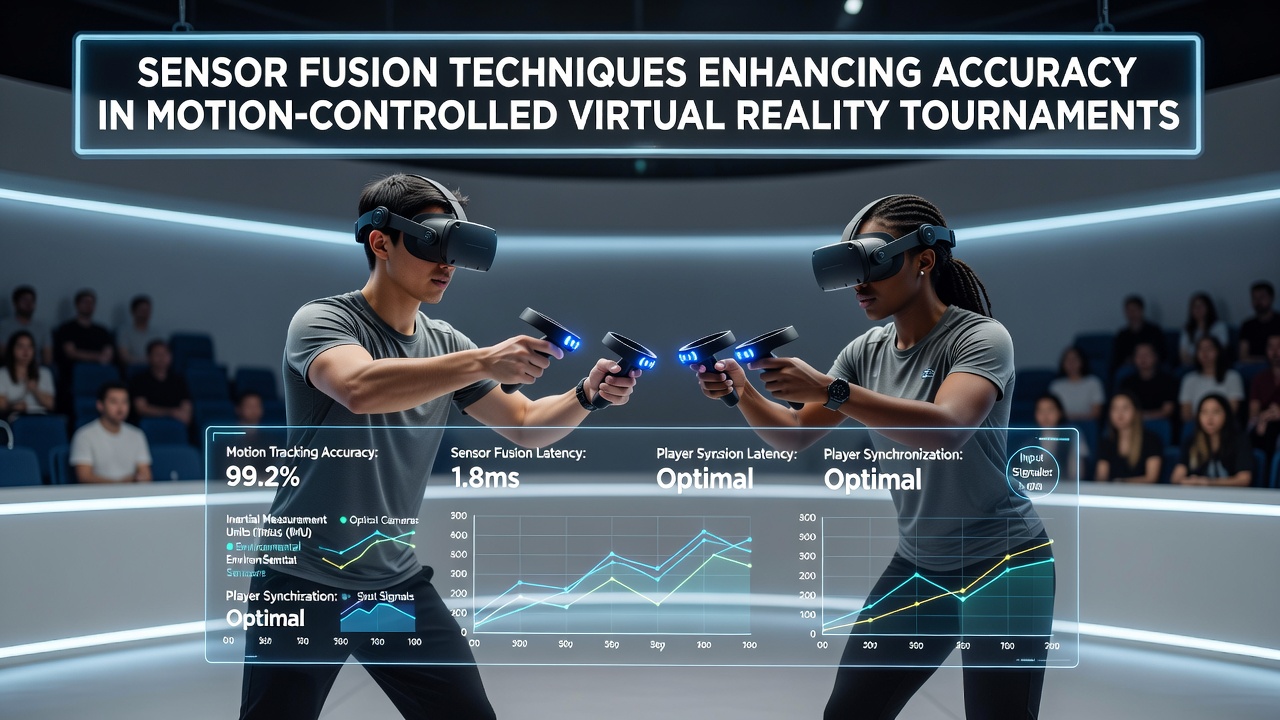
Sensor Fusion Techniques Enhancing Accuracy in Motion-Controlled Virtual Reality Tournaments
Virtual reality tournaments that rely on motion controls have grown more competitive since organizers began integrating multiple sensor streams into single unified tracking systems. Sensor fusion combines data from inertial measurement units, optical cameras, and depth sensors to reduce positional drift and improve response times during fast-paced matches.
Engineers apply algorithms such as Kalman filters and complementary filters to merge readings in real time. These methods weigh inputs based on noise characteristics so that gyroscope data corrects accelerometer drift while camera frames recalibrate absolute position. Research from the University of Melbourne shows fusion pipelines cut average tracking error by 40 percent compared with single-sensor setups in controlled tests conducted through 2025.
Core Components in Modern VR Tracking Systems
Standard motion-controlled headsets and controllers incorporate micro-electromechanical system sensors that sample at rates above 1,000 Hz. Optical systems from external base stations or inside-out cameras add visual references at 90 to 120 frames per second. When fused, the combined output maintains sub-millimeter accuracy even during rapid gestures that occur in rhythm-based or fighting game formats.
Developers calibrate each device against known reference points before events, yet environmental factors such as lighting changes and magnetic interference still affect individual sensors. Fusion routines compensate by cross-checking measurements and discarding outliers that fall outside expected physical constraints.
Implementation in Tournament Environments
Event organizers in November 2026 scheduled a series of international VR competitions that required all entrants to use standardized fusion-enabled hardware profiles. Matches took place across distributed arenas where server tick rates synchronized with local sensor fusion loops to keep latency below 20 milliseconds end to end.
Teams that adopted multi-sensor rigs reported fewer instances of virtual limb clipping through arena boundaries. Data logs collected during preliminary rounds indicated that fused tracking maintained consistency across varying room sizes and participant movement speeds.
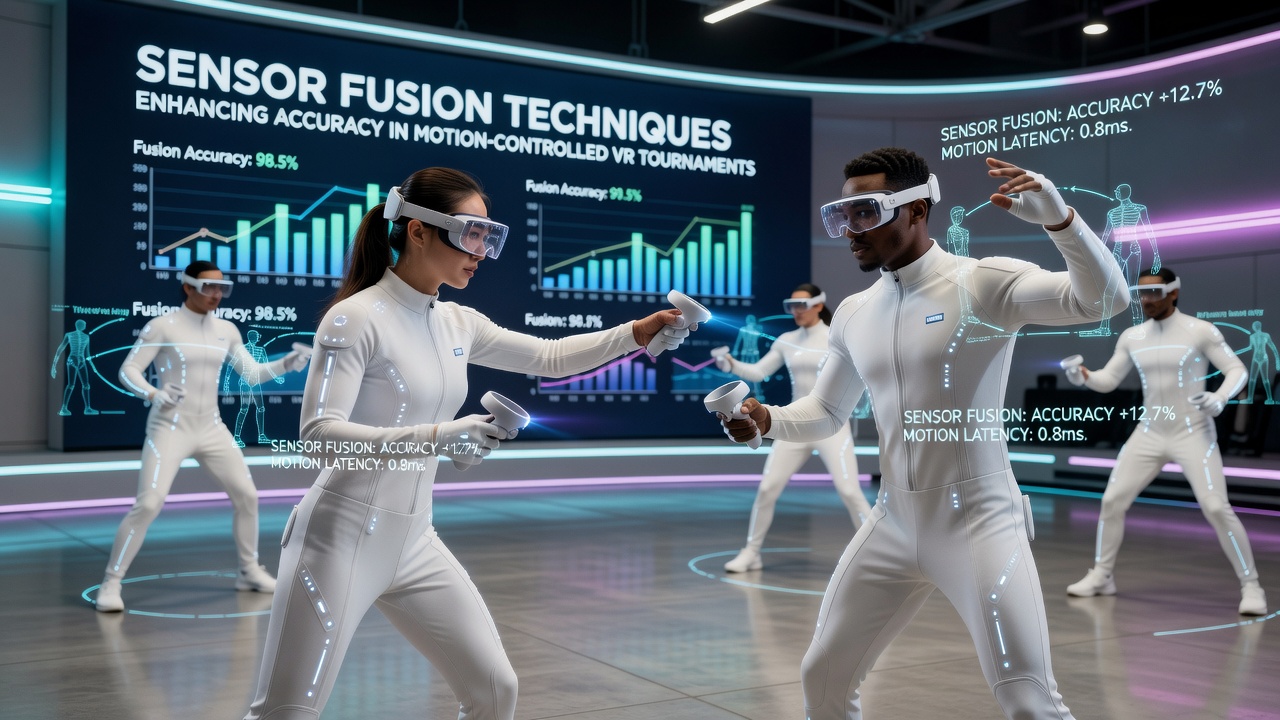
Software layers running on edge nodes process raw packets from headsets and hand controllers before forwarding refined poses to the central match server. This architecture allows each venue to handle its own sensor calibration while still feeding a common game state that referees can audit for fairness.
Algorithmic Approaches and Performance Metrics
Particle filters and extended Kalman variants appear frequently in published implementations because they handle nonlinear motion models without excessive computational overhead. Studies from the National Research Council of Canada measured frame-to-frame jitter reductions of 35 percent when these filters replaced basic averaging methods during simulated tournament sequences.
Benchmarking groups release annual reports that compare end-to-end latency across commercial headsets. Figures from the 2025 edition reveal that devices employing adaptive fusion weights maintained positional variance under 1.5 millimeters during peak exertion periods, whereas fixed-weight systems climbed above 3 millimeters under identical conditions.
Integration Challenges Across Hardware Generations
Legacy controllers designed without native fusion support require external processing boxes that intercept and reinterpret sensor streams. Tournament staff in multiple regions have documented successful pairings between older inertial units and newer camera arrays, although calibration times increase by roughly 15 minutes per station.
Wireless transmission of fused data introduces additional variables because packet loss can interrupt the continuous stream needed for accurate prediction. Error-correction protocols embedded in current firmware mitigate most dropouts, yet organizers continue to maintain wired backup connections at every station during high-stakes finals.
Future Refinements and Standardization Efforts
Industry working groups have begun drafting common data formats that allow fusion engines from different manufacturers to exchange intermediate results. These standards aim to reduce the engineering burden on developers who currently maintain separate pipelines for each hardware vendor.
Academic teams continue publishing open datasets captured during actual competition play, which accelerates testing of new fusion variants. Observers note that access to these recordings helps smaller studios validate improvements without building their own capture facilities.
Conclusion
Sensor fusion has become the baseline expectation for motion-controlled VR tournaments because it delivers measurable gains in positional accuracy and responsiveness. Continued refinement of filtering techniques, combined with broader hardware compatibility, supports the expansion of these events into new regions and formats. Data collected through 2026 events will likely guide the next generation of tracking standards that organizers adopt worldwide.