Exploring Neural Interface Prototypes Bridging Human Reflexes with Online Strategy Game Inputs
Parker Schwarz · Sep 1, 2026
Exploring Neural Interface Prototypes Bridging Human Reflexes with Online Strategy Game Inputs
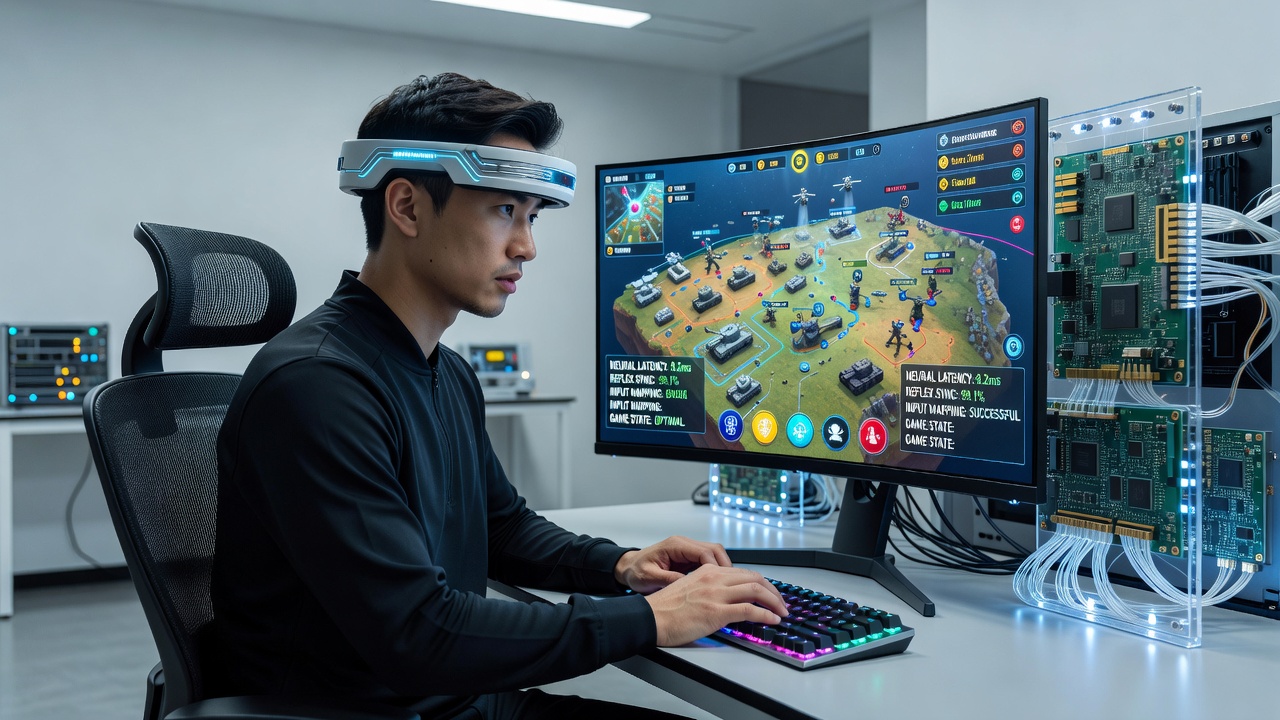
Neural interface prototypes have emerged as devices that translate neural signals from human reflexes directly into commands for online strategy games, allowing players to issue orders through thought patterns rather than traditional peripherals. Research teams at institutions across North America and Europe have documented how these systems detect motor cortex activity associated with quick decisions, such as unit selection or resource allocation, and convert that activity into game inputs within milliseconds. Data from prototype trials indicate that response times can drop below those achieved with keyboards or mice because the interface bypasses physical movement entirely, yet accuracy depends on training algorithms that adapt to individual brain patterns over multiple sessions.
Core Technologies Behind Reflex Integration
Prototypes typically combine electroencephalography sensors with machine learning models trained on datasets from strategy game scenarios, where players perform rapid tactical choices under time pressure. Engineers at several labs have refined signal processing pipelines that filter noise from muscle artifacts and environmental interference, resulting in cleaner command streams for games like real-time strategy titles. Studies conducted through 2025 and into 2026 show that calibration periods lasting thirty to sixty minutes enable users to achieve consistent command recognition rates above 85 percent for basic actions, while more complex sequences require additional refinement through repeated gameplay loops.
Applications in Online Strategy Environments
In distributed online matches spanning multiple continents, these interfaces allow players to maintain focus on macro-level planning because micro-commands flow directly from reflexive neural responses. One documented case involved participants competing in large-scale persistent worlds where neural triggers replaced mouse clicks for group formations, reducing the physical strain that accumulates during extended tournaments. Observers note that server-side systems must synchronize these low-latency inputs with variable tick rates, a process that benefits from edge computing nodes positioned near regional data centers to minimize jitter during peak evening hours across different time zones.
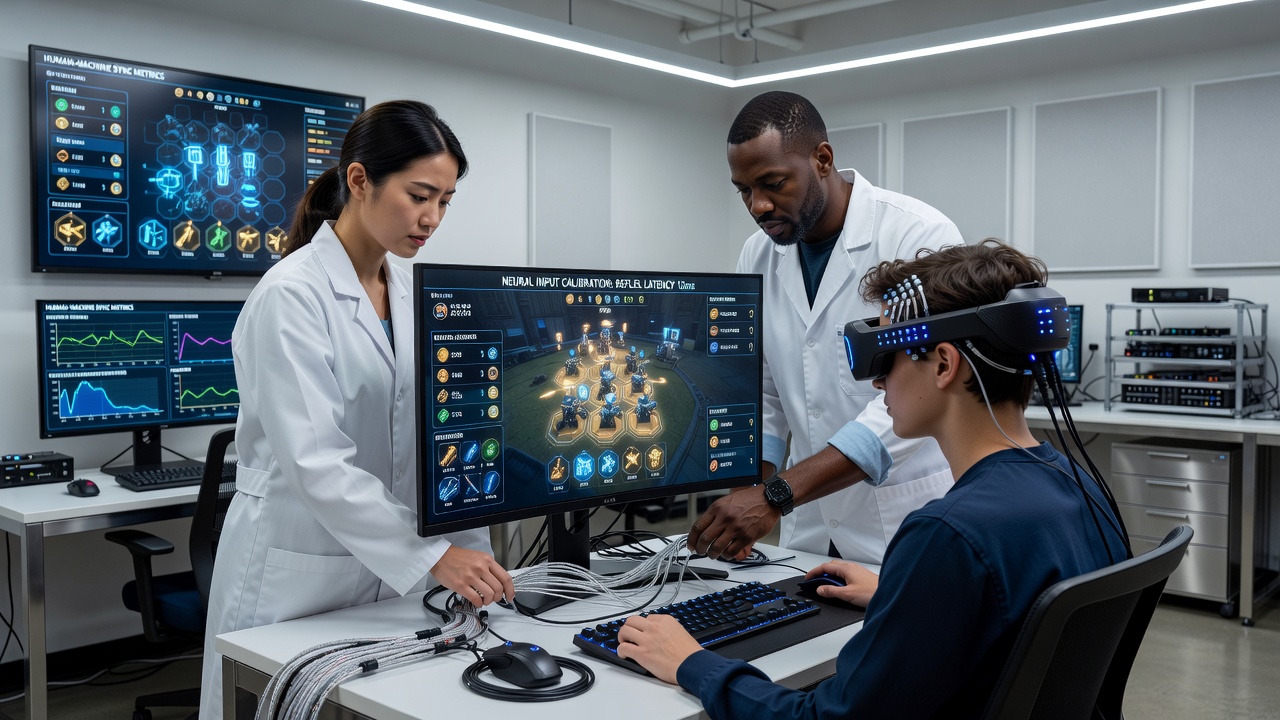
Developments reported in September 2026 highlighted firmware updates that improved compatibility between early neural headsets and subscription-based cloud platforms, enabling cross-device play without dedicated hardware at every endpoint. Figures from industry testing reveal that integration with adaptive bitrate streaming maintains visual consistency even when neural command packets arrive alongside standard network traffic during high-usage periods. Researchers have mapped specific brainwave signatures associated with defensive reflexes in strategy scenarios, allowing the system to anticipate and execute preemptive actions once patterns reach a threshold probability.
Performance Metrics and Testing Data
Benchmarks compiled by academic groups in Canada and Australia demonstrate that neural-assisted inputs can stabilize performance across sessions where traditional controllers introduce variability due to fatigue. Latency measurements from controlled experiments place average input-to-action delays at 18 to 25 milliseconds for trained users, a range that aligns with competitive requirements in fast-paced strategy titles. Those who have examined signal integrity note that trace optimizations on custom circuit boards further reduce packet loss when adapters handle both neural streams and conventional network traffic simultaneously.
Regulatory and Safety Considerations
Government agencies such as the U.S. Food and Drug Administration have issued guidance on non-invasive neural devices intended for consumer applications, requiring manufacturers to demonstrate electromagnetic compatibility and data privacy protections before wider deployment. Parallel frameworks from the European Commission emphasize standardized testing protocols for brain-signal accuracy under varying environmental conditions, including coastal zones where atmospheric factors can affect supporting wireless links. These requirements shape prototype iterations that prioritize secure transmission of neural data to prevent unauthorized access during live matches.
Future Integration Pathways
Collaborations between hardware developers and game studios continue to explore how predictive models trained on aggregated gameplay data can refine reflex mapping for individual users without requiring manual recalibration each session. Evidence from ongoing trials suggests that combining neural inputs with existing controller feedback loops enhances precision in rhythm-timed strategy elements, such as timed ability activations. Teams working on distributed networks have tested protocols that route neural commands through continent-spanning nodes to maintain synchronization even when player bases span multiple regions with differing infrastructure reliability.
Conclusion
Neural interface prototypes represent a measurable advancement in how human reflexes connect to online strategy game systems, supported by documented performance gains in controlled and field testing environments. Continued refinement through 2026 and beyond will depend on alignment between technical capabilities, regulatory standards, and the evolving demands of competitive play across global platforms.