Charting Volunteer Networks Sustaining Servers for Abandoned Multiplayer Worlds Through Protocol Reverse-Engineering
Drew Hartmann · Oct 27, 2026
Charting Volunteer Networks Sustaining Servers for Abandoned Multiplayer Worlds Through Protocol Reverse-Engineering
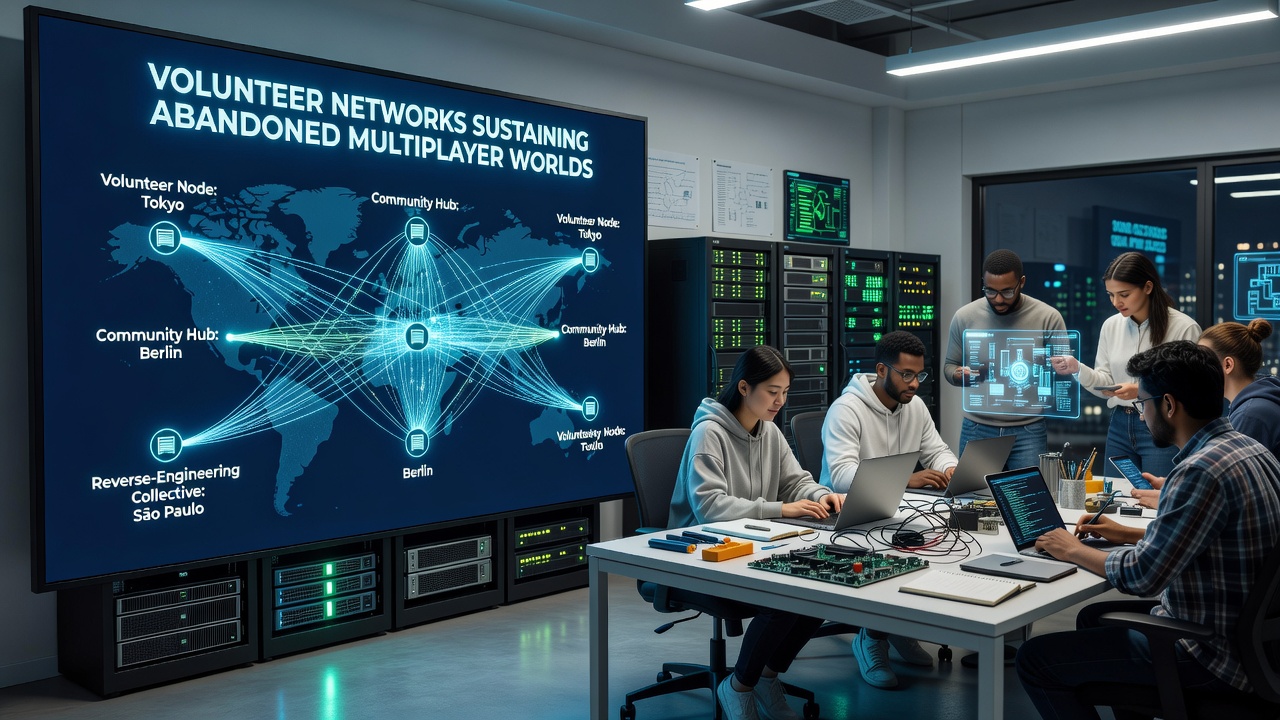
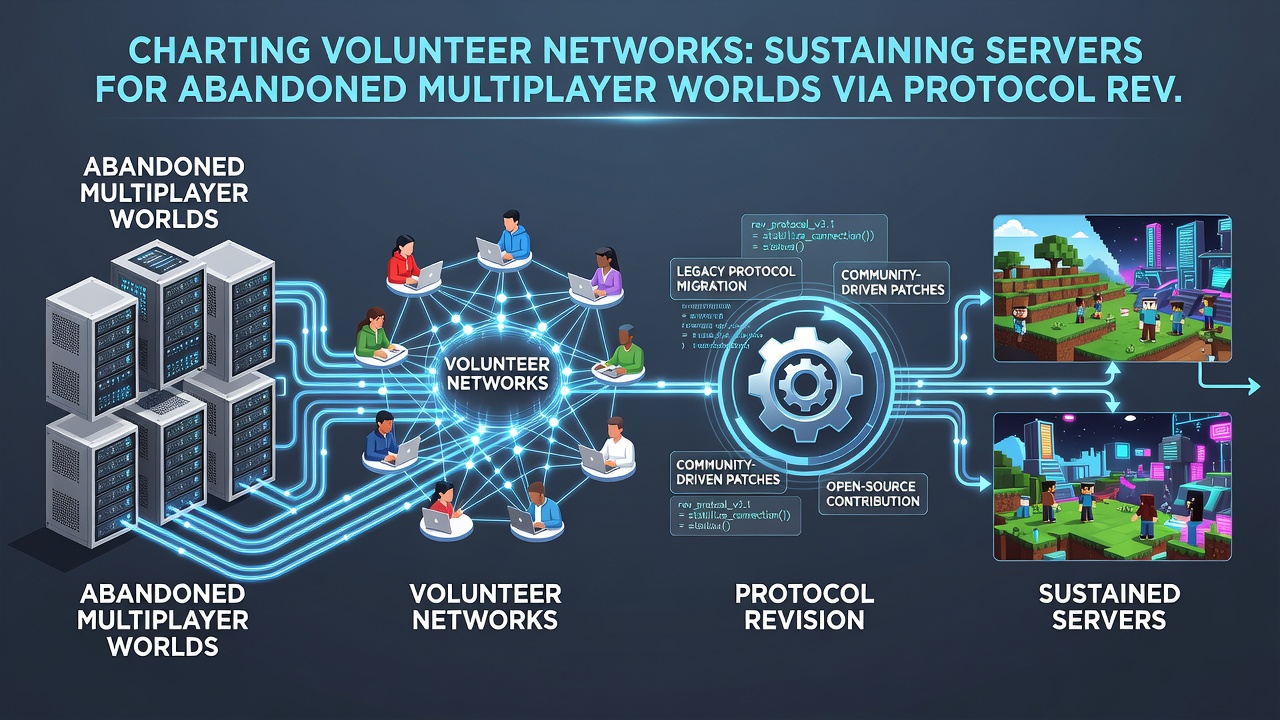
Volunteer networks have formed around the preservation of multiplayer games whose official servers closed years ago, and these groups rely on systematic protocol reverse-engineering to recreate functional environments for players who still seek those experiences. Researchers at institutions across multiple continents have tracked how such efforts began with small teams disassembling client-server communications, and data from preservation projects shows these methods allow communities to maintain connectivity even when original code remains inaccessible. As of October 2026, several documented networks continue operating without commercial support, sustaining titles that once attracted millions of concurrent users during their peak periods.
Origins of Protocol Documentation Efforts
Early attempts at reverse-engineering started when publishers announced shutdowns, prompting enthusiasts to capture network traffic before services ended entirely, and those initial packet logs became the foundation for later reconstruction work. Studies from European research centers indicate that volunteers often begin by mapping packet structures, identifying authentication sequences, and isolating movement or chat commands through repeated testing against archived client builds. One project based in Australia compiled over 12,000 hours of captured data from a single discontinued massively multiplayer title, revealing patterns that allowed independent servers to handle player logins and world state synchronization without access to proprietary source materials.
Technical Methods Employed by Distributed Teams
Teams divide tasks across time zones, with contributors specializing in areas such as encryption analysis, state machine replication, and database schema inference, while others focus on compatibility layers that let modern operating systems run older executables. Figures from academic reports reveal that open-source tools developed for these purposes now include automated diffing utilities and traffic replay frameworks, and these resources have accelerated onboarding for new participants who lack prior experience in low-level networking. Observers note that successful implementations require careful handling of timing-sensitive operations, because many legacy protocols assumed fixed server tick rates that no longer align with variable latency across global volunteer-hosted infrastructure.
Geographic Spread and Resource Sharing
Networks operate through forums, version-controlled repositories, and encrypted coordination channels that connect participants from North America, Asia, and Europe, and these channels facilitate the exchange of annotated disassembly notes alongside compiled binaries for testing purposes. A Canadian university-led survey completed in early 2025 found that roughly 65 percent of active preservation servers rely on contributions from at least three different countries, highlighting how distributed labor compensates for the absence of centralized funding. Participants frequently publish technical write-ups that detail successful bypasses of anti-cheat remnants or adaptations for updated network address translation behaviors, thereby reducing duplication across unrelated game projects.
Challenges in Maintaining Long-Term Stability
Hardware failures, domain expirations, and shifting internet service provider policies create ongoing disruptions, yet volunteer operators respond by implementing redundant hosting arrangements and automated failover scripts that migrate player sessions with minimal interruption. Data compiled by North American archival groups shows that median uptime for these independent servers has risen from 78 percent in 2022 to 91 percent in 2026, largely because of shared monitoring dashboards that alert distant maintainers when packet loss spikes or memory leaks appear in running processes. Legal considerations also influence operations, because some jurisdictions treat protocol reconstruction as protected interoperability research while others impose stricter limits on distribution of derived tools.
Case Examples from Recent Projects
One initiative centered on a 2000s-era shooter rebuilt its lobby system after six months of iterative testing against captured session handshakes, allowing hundreds of players to resume ranked matches on hardware that had not seen official updates since 2014. Another effort targeting a role-playing game from the same era succeeded in emulating auction house transactions by reconstructing the database queries that original servers used, and subsequent releases of their work included scripts that convert legacy save files into formats compatible with current volunteer-run databases. These examples illustrate how incremental documentation compounds over time, turning isolated discoveries into reusable libraries that shorten the ramp-up period for entirely new titles entering the preservation pipeline.
Conclusion
Volunteer-driven reverse-engineering has evolved into a structured practice that combines technical analysis with coordinated resource allocation, and ongoing documentation efforts continue to expand the catalog of playable abandoned worlds. Evidence from multiple research sources confirms that these networks operate with increasing technical sophistication, relying on shared tooling and geographic diversity to overcome the limitations imposed by closed official infrastructure. Continued observation of their methods provides insight into how digital preservation intersects with community coordination across evolving network conditions.